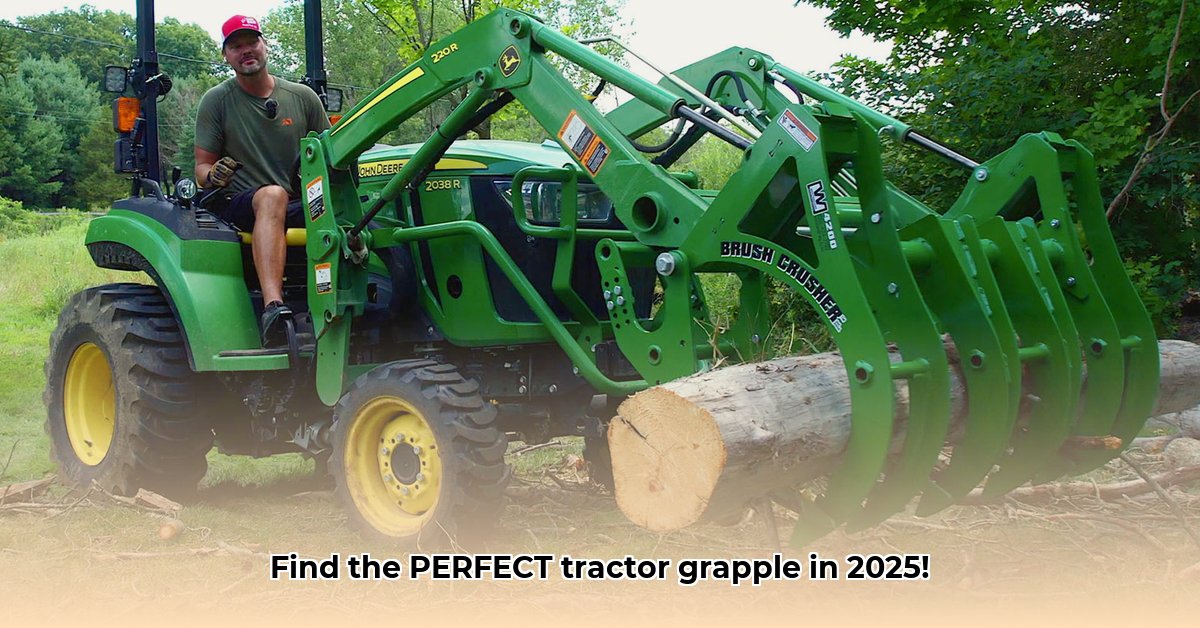
Choosing the right grapple for your tractor is a significant investment impacting efficiency and longevity. This guide compares mechanical and hydraulic grapples, helping you choose the best option based on cost, reliability, and your specific needs. The key trade-off is initial cost versus long-term operational expenses and reliability. For more grapple options, check out this helpful resource.
Mechanical Grapples: A Budget-Friendly Approach
Mechanical grapples offer a lower upfront cost, making them attractive to budget-conscious buyers. Their simpler design, with fewer moving parts, potentially simplifies basic maintenance for mechanically inclined users. However, this simplicity comes at the cost of durability and precision.
Pros:
- Lower initial purchase price.
- Simpler design, potentially easier for basic maintenance.
Cons:
- Higher failure rate compared to hydraulic grapples, particularly under heavy loads or strenuous use. Reports from online forums, such as Green Tractor Talk, highlight failures in models like the MG20F, often due to broken arms and damaged linkage points.
- Less precise control, increasing the risk of damage to both the grapple and tractor. This lack of precision makes handling delicate materials more challenging.
- More frequent and potentially costly maintenance may be needed compared to hydraulic grapples.
Hydraulic Grapples: Precision and Enhanced Reliability
Hydraulic grapples represent a more significant initial investment, but their enhanced precision, reliability, and longer lifespan often translate into lower overall costs over time. The hydraulic system allows for precise control of clamping force, enabling gentle handling of delicate loads alongside powerful gripping of heavy materials.
Pros:
- Greater reliability and durability, resulting in fewer breakdowns.
- Precise control minimizes the risk of damage to equipment and materials.
- Generally longer lifespan and lower long-term maintenance costs compared to mechanical grapples.
- Smoother operation, reducing operator fatigue.
Cons:
- Higher initial purchase price.
- Requires a tractor equipped with a third-function hydraulic system, adding to the overall cost.
Comparative Analysis: Hydraulic vs. Mechanical Grapples
| Feature | Mechanical Grapple | Hydraulic Grapple |
|---|---|---|
| Initial Cost | Significantly Lower | Significantly Higher |
| Reliability | Lower; prone to failures | Higher; more durable |
| Maintenance | More frequent; potentially costly | Less frequent; generally less expensive |
| Precision Control | Limited | Excellent |
| Best Suited For | Lighter loads, less demanding tasks | Heavier loads, various tasks; larger tractors |
Selection Guide: Choosing the Right Grapple
Assess your workload: What materials will you handle (logs, scrap metal, pallets)? Heavier loads necessitate a more robust (and likely more expensive) grapple.
Determine your budget: Factor in both initial cost and potential long-term maintenance expenses. Will the reduced maintenance costs of a hydraulic grapple offset its higher purchase price over the grapple's lifespan?
Evaluate your experience: Are you comfortable with basic maintenance? A mechanical grapple might suffice if you can manage repairs, but a hydraulic grapple’s reliability minimizes downtime.
Check tractor compatibility: Ensure your tractor has the necessary lifting capacity and hydraulic capabilities (for hydraulic grapples).
Research and compare models: Explore reviews and specifications from reputable manufacturers to find a grapple suited to your needs.
Maintenance and Troubleshooting
Regular maintenance is crucial for extending the lifespan of either grapple type.
Regular Inspections: Check for loose bolts, bent parts, and excessive wear after each use, paying close attention to high-stress areas.
Lubrication: Regular lubrication of moving parts reduces friction and wear, particularly important for mechanical grapples.
Safe Operation Practices: Avoid overloading and use smooth, controlled movements.
Conclusion: Making the Right Choice
The decision between mechanical and hydraulic grapples hinges on a careful evaluation of your budget, workload, and experience level. While mechanical grapples offer an attractive initial cost, the potential for frequent repairs and reduced precision can negate these savings over time. Hydraulic grapples present a higher upfront investment but often translate into lower long-term costs due to their enhanced reliability and durability. Consider the total cost of ownership when making your decision, prioritizing the solution that delivers the best balance of cost-effectiveness and operational efficiency.